


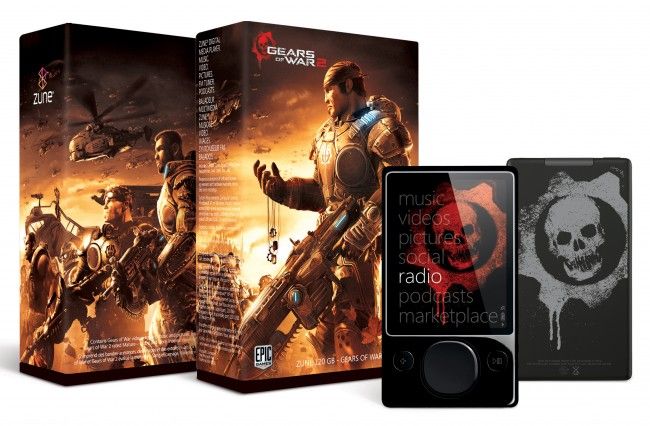
A Gears of War 2-themed Zune made sense in 2008
Hail Mary
During its second year, Zune revenue fell 54% to $117 million despite being a markedly better offering in every way over its predecessor. But Microsoft was still too far behind in several important ways. While it had finally brought cheaper flash players to the market, the Zune’s functionality looked incredibly limited when Apple launched the original iPod Touch in September 2007. Being an iPhone sans the phone and data plan, it was equipped with a larger (3.5″), multi-touch enabled screen, a full web browser, a full iPod player, and with the launch of iOS 2.0 in 2008, access to tens of thousands of apps. Zune was eking out a clever existence, but Apple was still coming up strong on the success of the iPod and, soon, the iPhone. The iPod Touch would not only eat the Zune’s lunch, but began to cannibalize sales of standard iPods as well.
At this point, it seemed Microsoft was losing faith in the Zune brand, now failing to update the service or hardware in any substantial way. Third-generation players launched in the fall of 2008 with little fanfare and only a bump in storage capacity to distinguish them from their predecessors. Allard had expressed that gaming still wasn’t a “great scenario”, but the iPod Touch would change many minds as the 2008 Zune players came with several games included, developed with Microsoft’s cross-platform XNA tools. But Microsoft wasn’t fully willing to ditch the Zune effort and set their sights on a radically different player in response to the iPod Touch’s success.
Microsoft’s new Zune was in development at a confusing time for Microsoft’s Entertainment & Devices unit alongside Project Pink, which was J Allard’s new phone project being built by recent acquires from Danger, the famous maker of the Sidekick phones for T-Mobile. (Interestingly, early departures from Danger following Microsoft’s acquisition included Andy Rubin and Matias Duarte. Rubin went to form Android while Duarte developed webOS’s interface before leaving to join Rubin on Android’s Honeycomb and Ice Cream Sandwich.) Even deeper was the secreted reboot of Windows Mobile (later rebranded as Windows Phone) under Andy Lees, who would eventually gain control over Project Pink. The rumors flew: would this new Zune finally be the hybrid PMP/phone/iPhone killing device that many observers had been dying for from Microsoft? Nope, this wouldn’t be revealed until Windows Phone was announced in Barcelona nearly a year later. This would be Microsoft’s last, best stab at controlling a dwindling PMP market, an admittedly short-sighted goal.
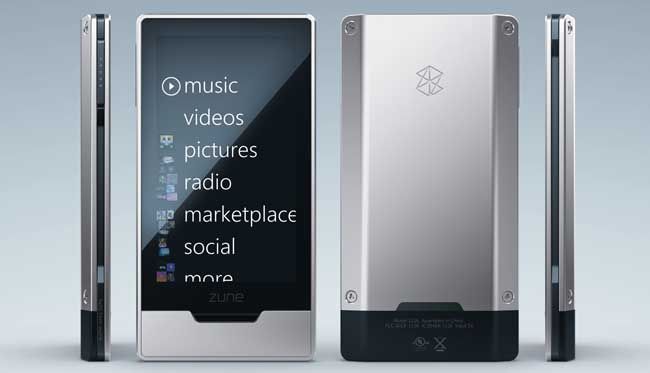
The Zune HD, Microsoft's last portable media player and arguably its best.
…but what a beautiful last, best stab it was. Co-designed by Astro Studios, who had worked with Microsoft on the Xbox 360 and concurrently on Project Pink, the Zune HD was gorgeous, encased in aluminum and housing a vivid 3.3″ OLED touchscreen with a single face button. The Zune HD also sported a first-generation Tegra chip by nvidia, which allowed for slick 3D menu transitions and full polygonal gaming that gave portable Xbox rumors a spin. The Zune Marketplace was upgraded to add (ultimately, a small number of) Zune HD apps which ultimately served as a bridge to Windows Phone support the following year. In retrospect, it seems odd that such a beautiful device came to light as Bach’s own division had three separate mobile initiatives in play at once. Microsoft also rebranded Xbox’s movie rental and music download service as Zune, which would allow them to capture 17.9% of the video market against Amazon and iTunes by 2011 on the back of Xbox’s success.
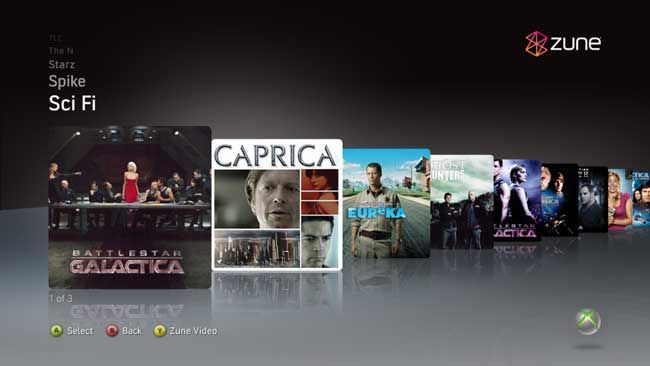
Microsoft moved Zune's services to Xbox 360 to some success
Epilogue: Zune’s Descent, Sinofsky’s Ascent
But even with the Xbox tie-in and a new player, Zune was far too gone. It was an idea far too small and far too late to make any headway against Apple’s monster. Despite reports that initial shipments of the Zune HD were selling out, Zune revenue continued to decline and rumors began to pop up throughout 2011 that Microsoft was finished with the media brand. In reality, they probably were, but there was no replacement to fill the gap. All Zune hardware was silently discontinued in October 2011 to the surprise of few. While Microsoft kept the Zune Marketplace to be re-branded as part of the new Xbox Music initiative due out later this year, the Zune desktop software was maintained to support Windows Phone apps and updates (Windows Phone Marketplace downloads were removed entirely in April 2012).
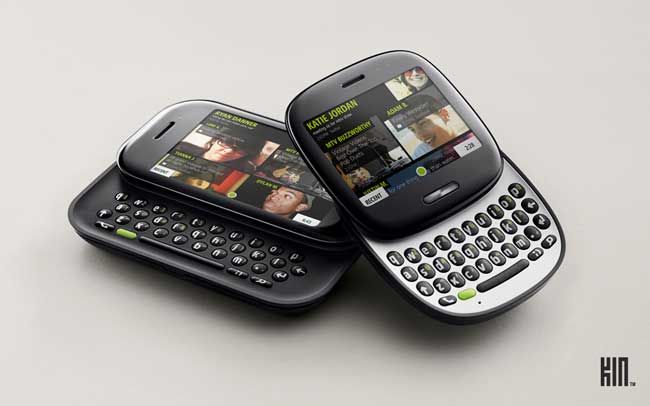
J Allard's doomed Kin phones.
After Windows Phone VP Andy Lees had taken control of Project Pink from J Allard, the project became known as Kin: a pair of phones targeted at socially-enabled tweens. Lees was unimpressed by the Sharp-produced devices and despite his attempts to suppress its progress, Microsoft still spent $500 million marketing the Kin phones on top of the billions more to develop them. The phones featured a new interface and social features divorced from anything Microsoft had created to date, which made it easy to discontinue the phones after only forty-eight days of sluggish sales on the market over the summer of 2010. Microsoft’s lack of enthusiasm for the phones drove a wedge in their relationship with Verizon, who carried Kin exclusively, that continues to this day with America’s largest carrier displaying a similar lack of enthusiasm regarding Windows Phone.
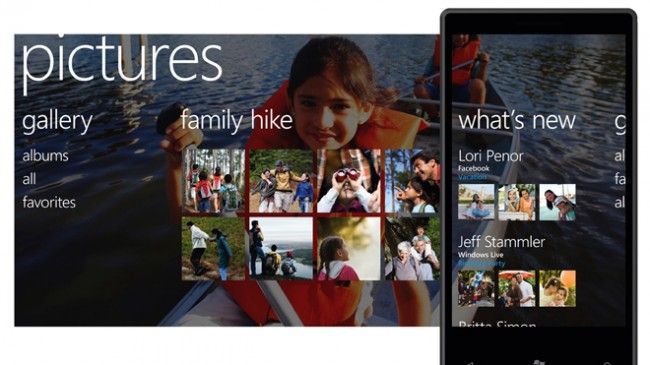
Windows Phone 7 with interface largely derived from Zune.
Windows Phone 7 became Microsoft’s new billion dollar attempt to recapture mobile share against iOS and Android, and was released to GSM-based carriers like the American AT&T and T-Mobile in late 2010. CEO Steve Ballmer unveiled a dozen international phones based around a whole new architecture that ditched all support for previous iterations of Windows Mobile and prominently featured the company’s new Metro design system. CDMA carriers were supported in early 2011, but in a mirroring of Zune’s first year, Windows Phone failed to gain much traction and Sprint and Verizon weren’t terribly interested. Those who had worked on Zune were migrated to Windows Phone, which featured full Zune support. Ballmer has banked billions on the success of their new mobile platform, but results have not been rosy as a lack of features, apps, and hardware selection has crippled their efforts.
Both Robbie Bach and J Allard announced their resignations in 2010, leaving during the fall release of Windows Phone. Allard announced he was staying on to be a ‘creative advisor’ to Ballmer, but while both claim personal reasons, it’s clear they had been under pressure by Ballmer and Windows boss Steven Sinofsky to perform better financially. Sinofsky, a 23-year Microsoft veteran, has been called the ‘heir apparent’ to the CEO crown should Ballmer step down or otherwise be removed. Sinofsky’s tight, well-regarded release of Windows 7 after the debacle of Windows Vista has put him in the limelight with the latest version selling 600 million licenses to date. Bach and Allard, however, had failed to come with a hit outside of the Xbox lineage. The E&D’s eHome offerings were non-starters and lab experiements, Zune had failed to be successful, Kin had failed, and Windows Phone would later struggle.
Things came to a head when Allard competed against Sinofsky to produce Microsoft’s new tablet strategy. Allard had championed the Courier project, a dual-screen project that implemented a stylus to allow users to draw and encircle notes in yet another new ecosystem with a unique interface. Meanwhile, Sinofsky backed a more conservative take that placed a Metro-style tile interface on top of a modified Windows 7 desktop that allowed for new web-friendly apps, still worked well with Microsoft’s other offerings (like Office), and provided legacy support to previous versions of Windows. In the end, Allard’s heady approach lost out to Sinofsky’s. Bach’s position was not refilled after his departure and the various subdivisions of E&D now report directly to Ballmer. Andy Lees was later released as head of Windows Phone and the rumored Apollo update for the mobile OS is a complete reboot, swapping out the ancient version of Windows CE that E&D had been sheltering for decades for a full-blown Windows 8-derivative core under Sinofsky’s watch that will allow for much greater functionality.
—-
For those on the outside, Zune looked like a failure from the beginning. It had Microsoft’s prints all over it and despite the Xbox 360’s success, many people still weren’t willing to invest in the Zune ecosystem after Apple’s iPod had already become a runaway hit. Zune had many great ideas at its core, but it makes sense in retrospect that, as Bach described it, they should’ve pushed harder for a great music experience on Windows Phone from the start. Despite the ridicule, the player and its ecosystem gained a cult following during its six years in service. For a word that didn’t mean anything, Zune came to mean something special.
Sources
http://www.geekwire.com/2012/robbie-bachs-lessons-intrapreneurship-xbox-zune/
Walter Isaacson’s “Steve Jobs”
http://www.manifest-tech.com/ce_products/flash_revolution.htm
http://www.ilounge.com/index.php/articles/comments/instant-expert-a-brief-history-of-ipod/
http://www.twice.com/article/234061-iPod_At_Core_Of_Apple_s_Shiny_Sales.php
http://www.linkedin.com/pub/bryan-lee/22/3b6/104
http://www.wiredzune.com/2006/11/zune-the-origin/
http://www.jdk.com/services/brand-identity/zune/brand-identity
http://seattletimes.nwsource.com/html/businesstechnology/2003116550_brier10.html
http://www.lexiconbranding.com/BrandNamingProcess/LinguisticProfile/ZuneIpod/
http://betanews.com/2006/07/20/october-debut-for-microsoft-ipod-killer/
http://www.engadget.com/2006/11/09/universal-music-get-fee-for-every-zune-sold/
http://www.slideshare.net/RockyS11/who-bryan-lee-corporate-vp-entertainment-and-devices-division
http://www.themoneytimes.com/node/2819
http://blog.seattlepi.com/microsoft/2008/11/19/microsoft-gives-zune-pass-members-free-songs/
http://www.electronista.com/articles/08/05/09/ms.sells.2m.zunes
http://www.coolfer.com/blog/archives/2009/01/zune_revenues_s.php
http://bits.blogs.nytimes.com/2007/11/16/j-allard-microsofts-plan-to-be-king-of-all-media/
http://www.winrumors.com/microsofts-zune-video-bites-healthy-chunk-out-of-apples-online-movie-share/
http://paidcontent.org/tech/microsoft-zune-interview-bryan-lee-corporate-vp-cfo-entertainment-and-devic/
http://www.astrostudios.com/blog/55/Zune_HD/
http://www.engadget.com/2009/09/19/zune-hd-a-major-sellout/
http://www.infoworld.com/t/microsoft-windows/windows-phone-really-under-sinofsky-185687
http://www.engadget.com/2010/07/02/life-and-death-of-microsoft-kin-the-inside-story/
http://kurtsthoughts.com/2011/03/15/on-the-death-of-zune-a-word-from-dave-mclauchlan/
http://www.winrumors.com/microsoft-confirms-zune-death-we-will-no-longer-be-producing-zune-players/
http://www.theverge.com/2012/4/25/2973682/microsoft-xbox-live-music-service-codename-woodstock-e3-2012
http://hexus.net/ce/news/gadgets/18452-rumoured-microsoft-handheld-gets-new-codename-xyz/
http://news.cnet.com/8301-10805_3-20128013-75/the-inside-story-of-how-microsoft-killed-its-courier-tablet/?tag=mncol;txt





Don't Keep This a
Secret, Share It