


Metro begins to surface
While the Xbox 360 sold like gangbusters out of the gate and was a stellar experience for the most part, the Zune did not. It was here that a lot of experimentation happened, starting with the late 2007 reboot of the product line and software while also including the Zune Social.
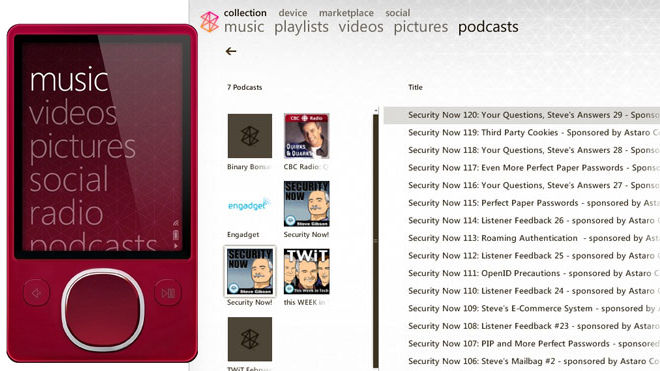 Zune 80 with Zune 2.0 software (2007)
Not only did Zune become a far more unique offering with 2.0, it also got an overhauled interface. 2.0 embraced the new Segoe typeface that Microsoft was implementing across its brand umbrella company-wide, the typography became (almost obnoxiously) larger, clipping at the ends, the Zune software became much more organized, and we begin to see the begin to see the first tiles in the interface.
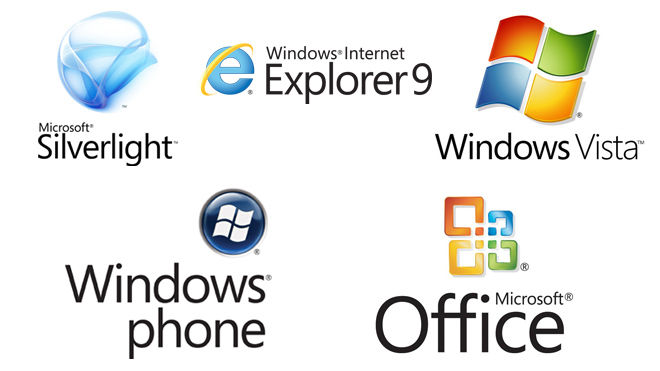 Microsoft’s Segoe typeface in action across its brands
Xbox 360 NXE, Zune 3.0 and beyond
While it may have seemed like a dream ten or twenty years ago, Microsoft decided that the Xbox 360 needed a whole new look. Not just from a branding perspective, but from a functional/UI one as well. While the blades were a lot more user friendly, bright and colorful compared to the dark, brooding interface of the original console, they still had a long way to go to compete with the bright, Apple-inspired aesthetics of the Nintendo Wii, which had become a breakout hit. The magic of firmware updates via the internet would allow the Xbox 360 to become a completely new piece of hardware. The result was the late 2008 update, called the New Xbox Experience, or NXE. If you’ve read the article up to this point, you begin to see how this change was inevitable, rather than purely reactionary.
 Xbox 360 NXE interface (2008)
Microsoft presented a second major NXE update in 2010 that, stop me if you’ve read this before, removed legacy typefaces like Convection, putting Segoe in its place, while also flattening the selections into tiles and losing the forced perspective. We’re almost there…
 Xbox 360 NXE interface (2010)
Microsoft even updated Media Center with support for 16×9 TVs:


As part of what would be their last major hardware/software update, Microsoft unveiled the Zune HD player with Zune 4.0 software. The Zune HD simplified the product line, was slender, sporting a gorgeous AMOLED touch screen. Unfortunately, while the player did decently, it just couldn’t mine away much of Apple’s monopoly.
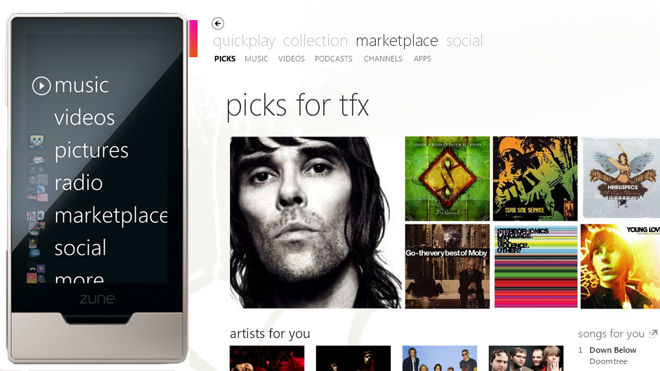
Zune HD and Zune 3.5 software (2009)
The Zune HD’s interface would also be the last iteration before the team’s next product. That’s right! It’s the…
Windows Phone
Believe it or not, children who were born just a few years ago, Microsoft used to be a major player in the phone space. This was back when Microsoft took Windows and shrunk it down to phone size, Start menu and all, forcing you to use a stylus for the more precise parts of the interface, including scroll bars and text entry. You were given a software keyboard and an optional gesture recognition space in case you wanted to chance scribbling your words in. These first Windows Mobile smartphones emerged from their phone-less PDA predecessors running PocketPC and became a hit amongst enterprise customers.
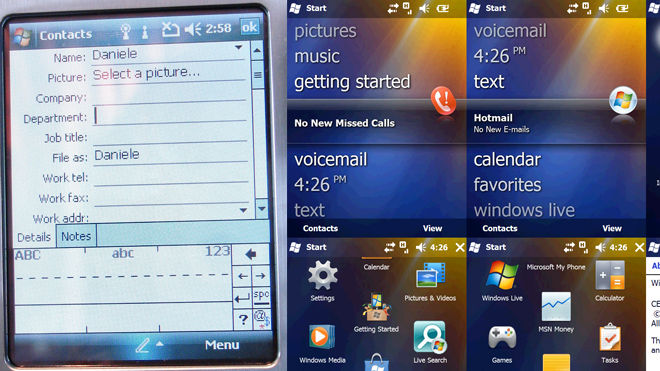 Left: latter-day PocketPC doing text entry, early to mid 00s. Right: Windows Mobile 6.5, the last major release before the epic reboot, circa 2009
However, Microsoft got soft on their position and failed to iterate. The software giant even allowed phone manufacturers to extensively convert the Windows Mobile interface. HTC developed its Touch interface on Windows Mobile, which carried on to Android, and made them a reputable phone manufacturer when their Sense skin was almost required to take full advantage of Microsoft’s ailing operating system. Microsoft’s grip was slipping, their software was getting old, their support was drying up, and customers were dropping their hardware left and right in favor of more capable BlackBerrys, iPhones, and Android-based smartphones. It was time for something epic, and epic’s name was…
 …JOE BELFIORE!!!!!!! (As observed today)
In a restructure to rehabilitate Windows Mobile platform, something desperately needed as we enter this post-PC world, Microsoft brought the Zune guys over to work on a new version. They tossed everything out. Windows Mobile became Windows Phone 7 (the number included to entice legacy WinMo customers, but was otherwise meaningless to new customers). A new interface was brought in, something they’d been working on for a few years, formally called Metro. This new platform would be completely different than their previous efforts and would, in fact, drop backwards compatibility with WinMo in the process. My favorite addition however, is the inclusion of a Zune player right in the OS. Awesome.
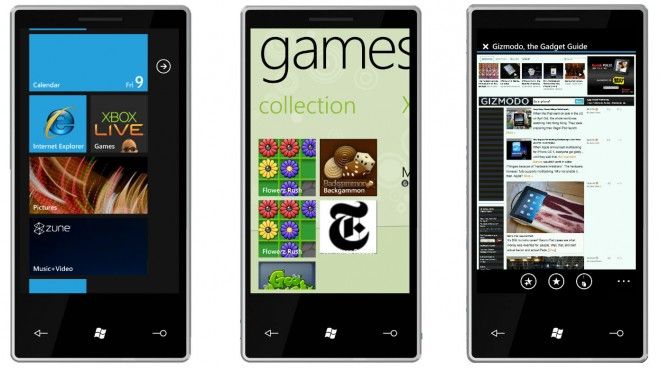
Using a fully tile and typography-based interface, we get a mobile operating system that is leagues different than any other, coming from some of the brightest and innovative minds at Microsoft, hiding away in the Home & Entertainment division. While we’ve had some time with it and don’t think that it’s entirely suitable for a device with a galaxy of functionality (befitting a smaller device like the Zune HD perfectly), I have no doubt that with iteration, it’s going to get much better.
Of course, the Metro buck doesn’t stop there…





Don't Keep This a
Secret, Share It